









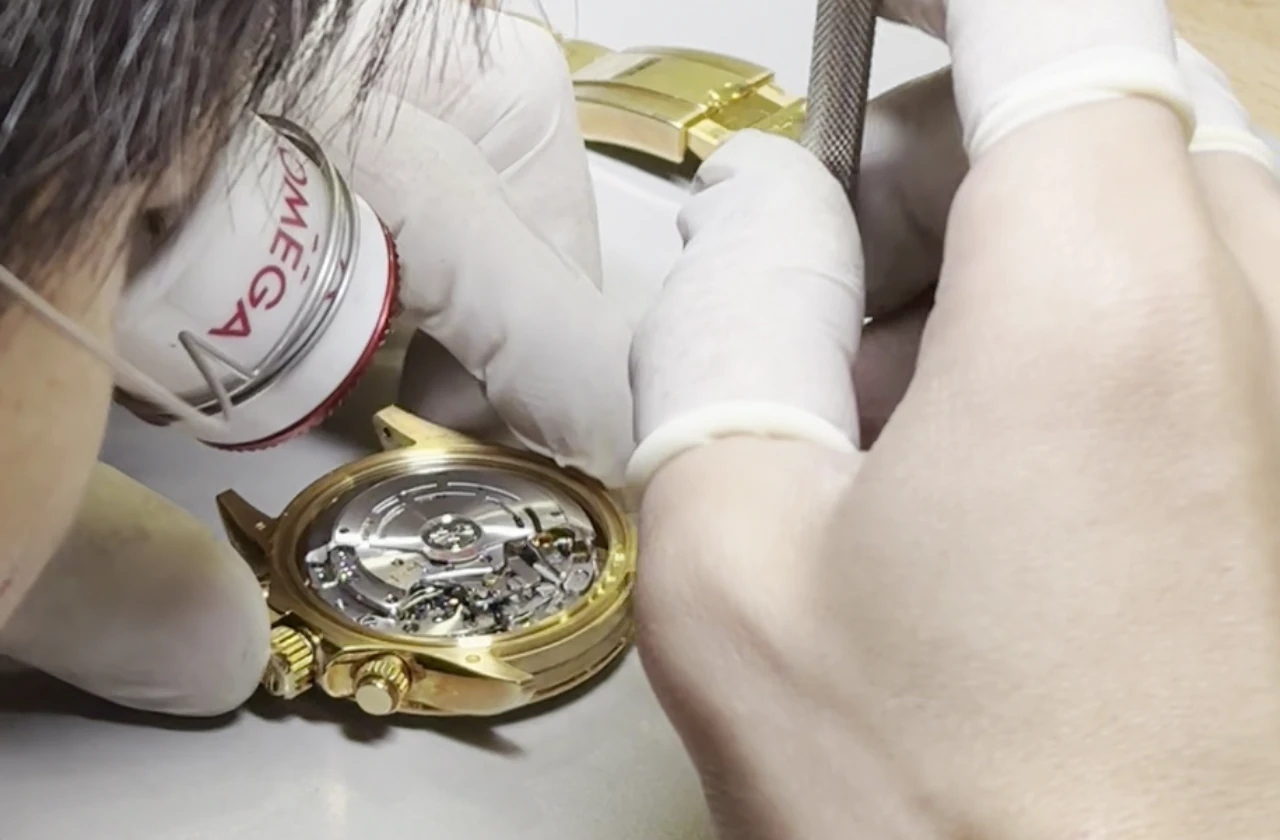
Your Rolex is a fine piece of craftsmanship, designed to last a lifetime with proper care. Like any precision instrument, regular servicing is essential to ensure it continues performing at its best.
While Rolex recommends servicing every ten years, some experts suggest maintenance every 3-5 years, depending on factors like daily wear, environment, and the complexity of your model.
In this guide, we’ll cover how often to get your Rolex serviced and what you need to know to maintain its performance.
Understanding Rolex Watch Servicing
When servicing a Rolex, different levels of care are involved. Routine maintenance for a Rolex typically focuses on keeping the watch in good working condition between full services. It involves:
- Removing dirt and dust from the case and bracelet.
- Adding oil to key moving parts to reduce wear and tear.
- Ensuring the seals are intact to maintain water resistance.
Full servicing is much more comprehensive and not something to attempt at home due to the intricate mechanical design of a Rolex.
Rolex services include every part being ultrasonically cleaned and lubricated, with any worn components replaced using genuine Rolex parts. After that, the movement is tested, and the case and bracelet are polished to bring back their original shine. Before returning the watch, it goes through tests to check for waterproofness, power reserve, and overall precision to ensure everything works perfectly.
Rolex recommends servicing every 10 years to maintain performance. Some trusted watch boutiques, however, suggest servicing every 3-5 years, depending on usage, to catch any potential issues early and keep the watch running smoothly.
Factors Influencing Service Frequency
Usage Patterns
Frequent use speeds up lubricant breakdown, requiring more regular care.
Rolex watches like the Datejust and Submariner Date, designed for daily wear, face more mechanical stress. With constant movement and exposure to elements, lubricants break down faster, and parts wear quicker. For these watches, it’s best to service them every 5 to 7 years.
Rolex owners who wear their timepieces less often, such as the Day-Date or Sky-Dweller, don’t experience the same level of wear. Since they’re used occasionally, they don’t need servicing as frequently. In these cases, you can stick to the recommended 10-year interval.
Environmental Exposure
Watches designed for harsh environments, like the Rolex Sea-Dweller or Explorer II, are built to endure extreme conditions such as deep-sea diving or high-altitude exploration.
However, regular exposure to water, salt, dust, or extreme temperatures can wear down seals and gaskets, which protect the watch movement. For instance, the Sea-Dweller, often exposed to saltwater, needs frequent servicing to ensure its water resistance and prevent corrosion.
Watch Age and Condition
Vintage Rolex watches like the original Submariner 6204 or the vintage timepiece Day-Date 1803 require more frequent servicing due to their age compared to new Rolex watches. Over time, components such as gaskets, lubricants, and even the metal parts of the movement deteriorate, leading to performance issues if not addressed promptly.
For example, the Submariner 6204, with its early water-resistant design, may need closer attention to ensure the seals remain intact. Similarly, the Day-Date 1803, with its complex movement, benefits from regular servicing to maintain accuracy and function.
Mechanical watches require regular maintenance to ensure their precision and longevity, as the intricate components are subject to wear over time. A mechanical watch serviced regularly will maintain its optimal performance.
Model-Specific Considerations
The specific model of Rolex you own impacts its service needs. Many Rolex watches with complexity like the Rolex Daytona (chronograph), Sky-Dweller (annual calendar and dual time zone), and Cellini Moonphase require more frequent care due to their intricate features.
Simpler models, such as the Oyster Perpetual and Explorer, need less frequent servicing. Mid-range models like the Submariner Date and Datejust should be serviced every 5 to 7 years.
More advanced timepieces, like the GMT-Master II and Yacht-Master II, need more frequent maintenance to keep their functions working smoothly.
Signs Your Rolex Needs Servicing

Here are the key signs that your Rolex needs servicing:
- Timekeeping Issues: If your Rolex gains or loses time significantly, it means the movement is compromised and needs servicing.
- Second Hand Movement: A stuttering or skipping second hand indicates a problem with the movement’s gears or power reserve.
- Condensation: Moisture under the crystal means the seals are compromised, risking corrosion and movement damage.
- Winding Issues: Difficulty winding or setting the time suggests mechanical wear or gasket issues, which can lead to water damage.
- Unusual Sounds: Strange noises when shaking the watch indicate loose internal components that need attention.
- Physical Damage: Scratches, dents, or wear on the watch case or bracelet can affect both appearance and internal function.
- Dulling Finish: A dull finish or dirt buildup can lead to metal wear, so regular cleaning and servicing help maintain the watch’s look and function.
If you notice any of these signs, it’s best to have your Rolex checked by a professional to prevent more serious damage.
What to Expect During a Rolex Service
If you’ve ever wondered what happens during a full Rolex service, the process follows a detailed, 10-step approach to ensure your watch is thoroughly cared for.
Here’s what happens at each stage of professional servicing:
Step 1: Initial Assessment
The staff will note any specific concerns or requests you have for your watch. A certified watchmaker will then perform a complete assessment of the watch and provide an estimate for approval before any work begins.
Step 2: Complete Dismantling
The watch is carefully dismantled, starting with the removal of the movement, dial, hands, and bracelet. Each part is then individually inspected to determine what needs attention.
Step 3: Inspection
Every component is closely examined for wear and damage. If any parts don’t meet the required standards, they are replaced with genuine parts to ensure top performance.
Step 4: Component Cleaning
All parts are meticulously cleaned to remove dirt, dust, and buildup, preparing them for reassembly. This ensures the watch is free from any contaminants that could affect performance.
Step 5: Repair/Replacement
If any parts are damaged or worn out, they are professionally repaired or replaced using authentic components. This ensures the watch is restored to its optimal condition.
Step 6: Oiling
The reassembled movement is lubricated to minimize friction and ensure smooth operation. This step is essential for maintaining precision and prolonging the life of the watch.
Step 7: Reassembly
After all components are cleaned and oiled, the movement is reassembled and placed back into the case. Everything is put back together with care to maintain the integrity of the watch.
Step 8: Movement Calibration
Once reassembled, the movement is calibrated to meet the accuracy standards required for Rolex watches. This ensures the watch keeps time with precision.
Step 9: Ultrasonic Cleaning
The case and bracelet go through ultrasonic cleaning to remove any remaining dirt or debris, leaving the watch looking as clean as new.
Step 10: Quality Control and Testing
Before the watch is returned, it goes through rigorous testing. This includes checking for waterproofness, accuracy, and overall performance to make sure everything functions perfectly.
After the service process, you can expect your watch to be fully restored and performing optimally. For watch boutiques, expect 7 to 21 working days with a one-year warranty. At an authorized Rolex service centre, the turnaround time is 4 to 6 weeks with a two-year warranty.
Choosing the Right Service Center
When choosing the right service center for your luxury watch, it’s essential to weigh your options carefully. Whether you opt for an official Rolex service or a trusted independent second hand boutique, understanding the differences in expertise, pricing, and service can help you make the best decision.
| Feature | Authorized Rolex Service Center | Independent Watch Service Centre |
|---|---|---|
| Expertise | Rolex-trained watchmakers | Swiss-trained watchmakers with 16 years of experience |
| Parts | 100% genuine Rolex parts | 100% genuine parts |
| Warranty | Two-year service warranty | One-year service warranty |
| Tools and Equipment | Specialized Rolex equipment | Over $100,000 worth of advanced equipment |
| Turnaround Time | 4-6 weeks, depending on complexity | 7-21 working days |
| Service Pricing | Starting price at S$782.79 | Starts at S$600 |
| Focus | Strict Rolex standards | Competitive pricing with uncompromised quality |
| Customization | Limited, follows Rolex restoration standards | Professional repair and customization |
Both an Authorized Rolex Service Center and an Independent Watch Service Centre offer expert repairs, with Rolex-trained watchmakers using genuine parts. The Authorized Rolex Center provides a two-year warranty, but has a longer turnaround time and higher pricing. The Independent Center is faster, more affordable, and offers customization while maintaining high quality.
Costs Associated with Rolex Servicing

At an Authorized dealer or Rolex Service Center, service procedure prices typically range from S$781.58 to S$1563.17. These centers use genuine parts and follow strict Rolex guidelines, especially for complex models like the Daytona or Sky-Dweller, which cost more due to their intricate movements.
The Rolex servicing costs from independent watch boutiques start at around S$600. They offer competitive pricing and personalized service while still using authentic parts, often making them a more affordable option compared to official Rolex centers.
The cost vary depending on:
- Movement Complexity: Simpler watches like the Oyster Perpetual cost less to service than models with complex movements like the Daytona or GMT-Master II.
- Model and Case Material: Professional models like the Submariner are more expensive to service, and precious metal cases, such as Everose or white gold, require extra care.
- Condition: Watches with more wear and tear or those that are vintage models or older models may need additional repairs or rare parts, increasing the overall cost.
Before any work is done to service a Rolex, you’ll receive an estimate, ensuring you know what to expect and making the process transparent and straightforward.
While the upfront service cost might seem high, it saves you more in the long run. Regular maintenance prevents major issues and expensive repairs later, preserving both your watch’s function and value.
Maintaining Your Rolex Between Services

To keep your Rolex in great shape between services, it’s important to follow routine care practices. This includes:
- Wipe the watch regularly to remove dirt, oils, and grime that can build up over time.
- Store your Rolex in a protective case or watch box to prevent scratches or damage.
While continued accuracy and routine care is essential, you should also avoid certain common pitfalls to maximize your watch’s longevity:
- Keep your Rolex away from strong magnets, as they can affect its movement.
- Avoid exposing the watch to very hot or cold environments, which can damage internal components.
- This keeps the watch water-resistant and protects the movement from moisture.
In addition, there are some simple checks you can do at home to ensure everything is working smoothly:
- Regularly compare your Rolex’s time with an official time source.
- Look for signs of wear, scratches, or moisture under the crystal to catch issues early.
Conclusion
Maintaining your Rolex through regular servicing ensures its longevity and peak performance. Whether you follow Rolex’s 10-year recommendation or opt for more frequent servicing, keeping your watch in top condition is crucial.
Key Takeaways
- Rolex recommends servicing every 10 years, but a trusted watch boutique recommends having your watch checked every 3 to 5 years to retain its value and ensure it remains in optimal condition.
- The cost of servicing your Rolex at an authorized center ranges from S$600 to S$1565. At an independent watch service centre, servicing starts at S$600, with costs varying based on the model and any required part replacements.
- While Rolex centers follow strict brand standards, an independent watch service centre may offer competitive pricing, Swiss-trained experts, and personalized service without compromising quality.
Looking for expert care for your Rolex? With 16 years of Swiss-trained expertise, Watch Exchange provides precision servicing at competitive prices. Message us today to schedule your professional watch service!